Happy Friday! Today we are venturing into the role of crotchety old bartenders again but I think it’s with good reason. Sometimes innovation needs to be very carefully tailored in order to maintain the delicate balance that keeps hospitality functioning.
Can we work alongside the latest wave of tech advancements or will our entire industry be changed dramatically?
Bartenders Would Love If You’d Stop Doing This
Are You Avoiding Your Bartender With Tech?
AI is everywhere now. For better or for worse, the masses are looking to AI platforms for information that they might have had to dig through google results to find or talk to other human beings about not too long ago. Although there are some things that AI is helping to streamline in the bar and restaurant industry there are also things that it is damaging.
As a tool, AI can be an efficient and timesaving technology. Some restaurants are using it to help streamline ordering and reduce waste. Others have found it to be super useful when needing to translate menus for pop-ups in other countries. The bottom line is: the specific application of AI matters. Having AI write your cocktail menu? Probably not the wisest decision. Many seasoned bartenders know that although AI can get you a pretty close approximation to a good drink there are plenty of times that the recipe given without some careful tweaks is not always balanced.
What bartenders lament the most about the new uptick in AI use is actually how their guests are using it. In an article by Kara Newman for WineEnthusiast bartenders detail how guests have been asking ChatGPT to essentially order for them. Instead of asking the human person behind the bar (who really loves guiding guest experiences) to help them find the best drink for them guests prefer to leave the decision with a bot. The result of all this is actually starting to make bartenders feel like the robots in the situation:
“The thing that struck me was there was no want or need to ask me, or to give me the opportunity to ask about what they wanted or liked,” Aredes recalls. “I didn’t want to feel like I was a figurative machine just making a drink.”
Of course for those who seek out bars to connect with others there isn’t an AI substitute for the true bartender experience. There are plenty of heartening articles that discuss the irreplaceable human element in hospitality. The hope is that AI will help those in the hospitality industry utilize more of their time interacting with guests and tailoring that experience by taking over the mundane and tedious tasks, not the creative ones. Although there is a dark capitalistic stance always waiting to ruin the party: humans steal and bots don’t. There were a few short, fairly meaningless articles that cited a rich tech enthusiast (who owns and runs bars and restaurants) who was actively seeking out a robot bartender to run his bars since he was ‘stolen from everyday for 10 years’. If he’s willing to give up the cornerstone of bars and restaurant culture - community and connection - then he probably isn’t in the right industry anyway.
If You Open This Unmarked Door in London You End Up in the Paris of 1896
The Creative Concept of a London Cabaret Company
The time of the speakeasy may not be at its previous peak but that doesn’t mean that there aren’t some amazing concepts utilizing this popular format. A cabaret company called The Lost Estate in London specializes in immersive experiences for its attendees. The experience is part performance, part experience, with food and drink that is meant to transport guests into the time and place that the story takes place in.
The genius of the menu is in the careful design. The drinks were made not to replicate exact drinks of the era but to utilize ingredients that would have been available then. By doing so the drinks feel like less of a forced placement and more of a seamless transition through time.
For instance, Bell explained: “We’ve included an original 19th-century recipe for the Corpse Reviver [which features] 11 ingredients, and we’ve also developed Parisian variants of classic drinks that would plausibly have appeared at the time. For example, the Crusta is adapted with anisette to reflect the absinthe culture of the time and a Parisian julep incorporates Chartreuse.”
At the heart of the whole experience is a true story as well. The performance is meant to replicate an actual historical French nightclub and performance, Le Chat Noir. According to their own website: “Step through the doors of CHAT NOIR! and London disappears. You find yourself inside the legend itself—Le Chat Noir, the infamous club lost for over a century. This temple of art and anarchy, this sanctuary for the beautifully unhinged, has been re-imagined in lavish and fantastical detail by “immersive heavyweights” The Lost Estate—velvet drapes, candlelit tables, glittering aristocrats, the restless spirits of Bohemian Montmartre in every corner...”
When it comes to tailoring an experience and thoughtfully designing a historic time and place this truly stands out as a unique food and drink offering.
Best Video We Saw This Week
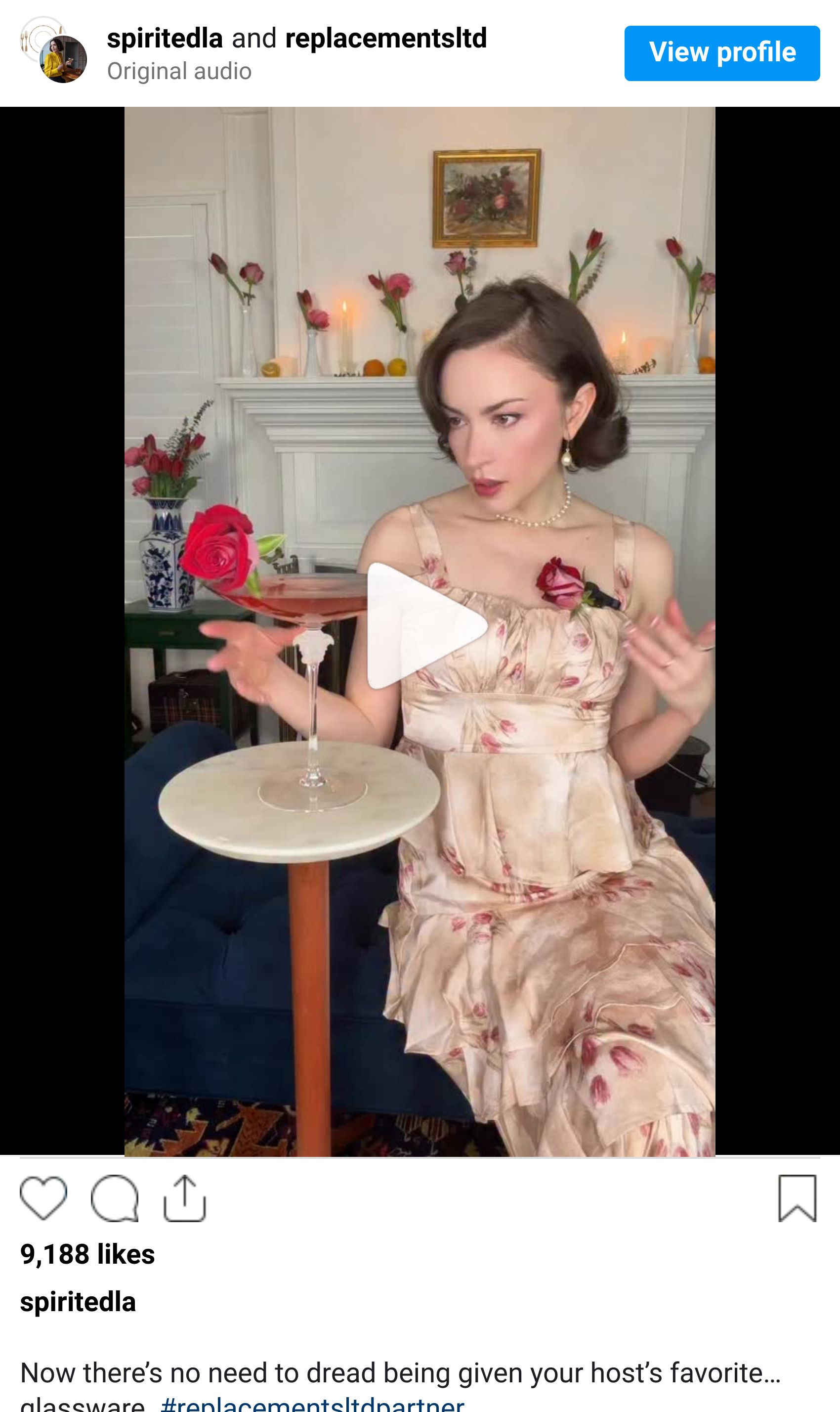
I’m not generally the one to break glasses in my family, but every family has one right? I think this concept is just really cool. There are so many times I have heard a glass break in the other room and immediately thought “oh god, I hope that’s not my favorite glass” and then it is. Now there is hope that you might not have to say goodbye to your favorite glassware when someone accidentally smashes it.
Quick Hits:
How GLP1s are changing the drinks landscape.
The 47 year old single malt that is made using volcanic rock. The distillery’s oldest and most exclusive release yet.
Some companies had some real good jokes this year, some others not so much. April Fools is a day when you really can’t trust anything you read online.
