Good Morning! Thank you for joining us for another week of news in booze. We have officially reached over 15k subscribers for this newsletter! Thank you to all of our readers both new and old, we are so happy that we get to deliver this weekly pour of news to all of you.
If you’d like to join us to discuss all things news and booze (and more) make sure to check out our Discord server.
Anyway, onto this weeks newsletter!
Second Largest Alcohol Distributer in the US Files For Chapter 11 Bankruptcy
What It Shows About the Alcohol Industry at Large
Republic National Distributing Company (RNDC) has officially filed for Chapter 11 bankruptcy after failing to rectify a number of high value debts with multiple creditors. The company had seen incredible sales during the COVID-19 alcohol boom and had been steadily losing profit ever since 2022. RNDC had been locked in to a number of big contracts when sales were high that soon left them over-committed and flooded with inventory they couldn’t sell.
The company faced a number of major set-backs in its original plan to slowly sell off inventory and discontinue operations in major sectors of the market. A lawsuit from Sazerac could very well be the event that sent the whole house of cards tumbling into official bankruptcy. Sazerac had filed the lawsuit because of almost $40 million in unpaid invoices and alleged that RNDC had been forcing customers to by non-Sazerac products in order to purchase highly sought after Pappy Van Winkle. In the years that followed RNDC lost suppliers that accounted for $3 billion in annual revenue. Then the vultures started circling and there was little else left but to file for Chapter 11.
The collapse of RNDC has shown just how precarious the alcohol industry has gotten since COVID. A company that once held the second-largest spot in the US industry has completely crumbled and is trying its best to go out slowly and softly for the sake of its creditors and employees.
Innovations In Sustainability
Science Has Provided a Secondary Industry For Alcohol Producers
You know we love an opportunity to talk about sustainability, and this article was just too good and too nerdy to pass up. As it turns out there are some big players making some really cool advancements in chemical production. Lallemand Biofuels & Distilled Spirits (LBDS), a global leader in yeast, enzymes, microbials and nutrition, and Braskem (B3: BRKM3, BRKM5, and BRKM6; NYSE: BAK; LATIBEX: XBRK), the largest polyolefins producer in the Americas have teamed up in order to develop a “bio-acetone production platform for the corn-ethanol industry that enables producers to generate a new coproduct alongside ethanol”.
In plain English: there may now be a strain of yeast that can be used when making corn-ethanol (think whiskey and vodka) that will also produce a bio-acetone at the same time. Why is this so cool? Acetone as we know and use it is most often sourced from fossil. It’s not exactly a ‘fossil-fuel’ but it is a resource that is not considered renewable. This new method of creating bio-acetone not only offers a 100% renewable source of acetone but also creates an acetone that is free of other undesirable elements such as benzene and phenol. Acetone is often used in cosmetics and other personal care items and is also used in paints, acrylic, and adhesives.
Although the main reason for excitement is the sustainable aspect of this advancement there is also the economic benefit that it could present to distillers. At a time when alcohol sales have seen a drop for a number of reasons this gives corn-ethanol producers the opportunity to diversify the products that they offer.
Is Rum Getting the Tequila Treatment?
How the Additive-Free Movement has Started to Effect Rum
Since pretty much all of our readers have come to us from Lui’s creator platforms (be that youtube, instagram, etc.) There’s a chance that most of you have already seen Lui’s video diving into what the additive-free movement is in the rum world. There’s a long and a short version but we’re here to highlight the major take-aways and why you should care.
Lui references an article by Camper English which you can find here that goes into detail about how rum entered the additive-free movement and how it is similar and different to the way things went down for tequila. Rum, unlike tequila, does not have one single governing body that determines what can and can’t be added to rum. Rum comes from a number of different countries and different countries may allow different additives such as sweeteners, colors, and flavorings. These things are allowed in the spirit legally and don’t require any special labeling, the same way as with tequila. The brands that are self-identifying as ‘additive-free’ are creating a conversation about how and why additives are used to begin with.
I think people are starting to see that rum can be made in ways that are just as interesting and showcase terroir the way a lot of other incredible spirits do. People have become aware of this in Tequila and mezcal and I think the curiosity is following them to other categories.
Rum is beginning to gain popularity as drinkers become more and more knowledgeable about spirits in general. Drinkers now know that rum isn’t just the booze you add to a sugary and fruit-forward drink, there is nuance and flavor to be appreciated from the spirit itself.
Best Video We Saw This Week
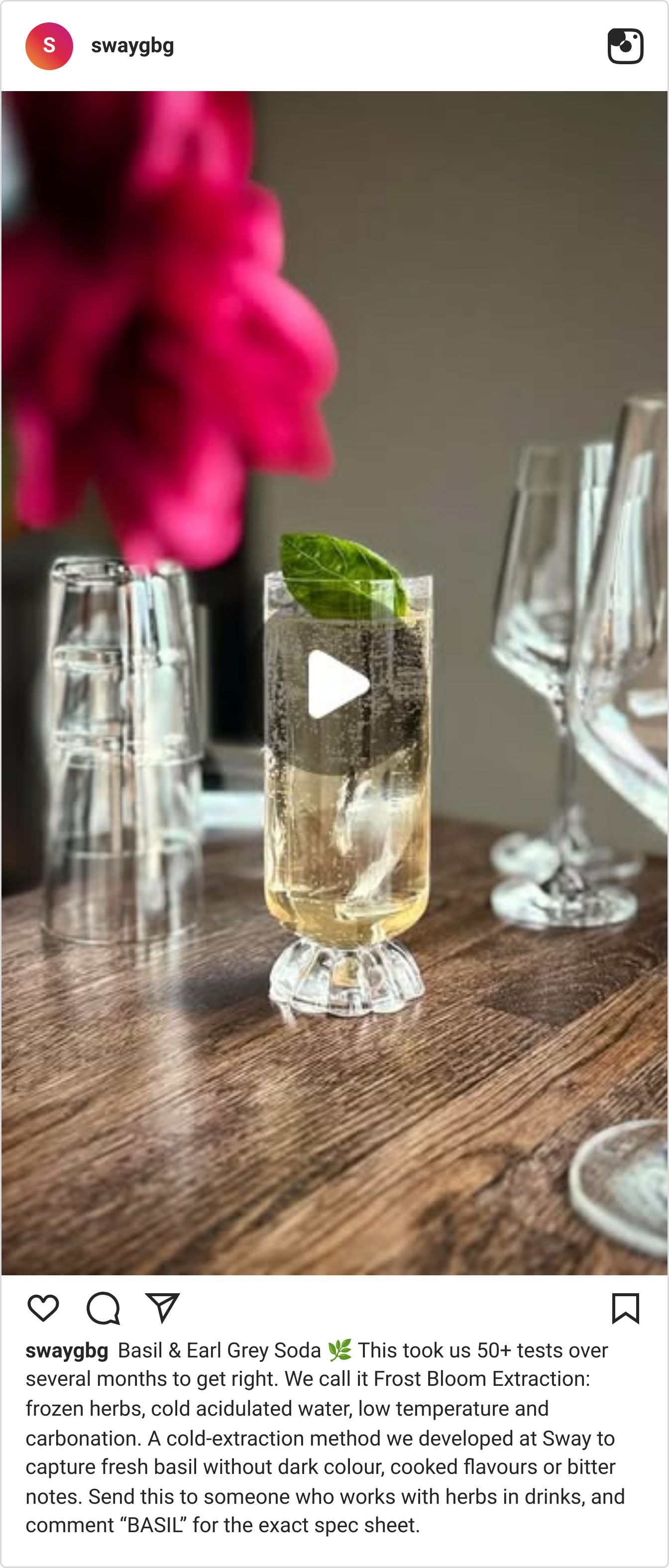
One thing I’ll never get sick of about this industry is how innovation is shared. When one creator comes across an amazing technique or way to do things they share it with the rest of the cocktail world. I love the idea of an herbal soda that offers a gentle way to flavor cocktails.
Quick Hits:
The new ‘Bottled in Bond’ whiskey that carries twice the age statement as the minimum requirement.
Even more innovations in sustainable packaging for RTD cocktails.
