Good Morning! This week we have a short, more concentrated newsletter for you. We are providing an update on the Noma abuse and fallout as protests begin and the pop-up is set to start.
Make sure to check out our Discord and weigh in on what you want to see more of in the future, and what you think about this developing story.
American Express and Blackbird Pull Sponsorships Just Days Before Noma Pop-Up Set to Start
What Started as an Instagram Expose Has Made it to Headline News
A few weeks ago we covered the initial wave of stories coming out about allegations of abuse by René Redzepi. The culture of abuse and bullying he built into his Noma empire allowed for there to be multiple abusers and victims working in a high pressure environment. Since our initial coverage there have been a number of articles and reports covering the abuse and the fallout resulting from it.
One of the most notable publications has been from the New York Times. It’s behind a paywall so I will link it but if you don’t already pay for a subscription to them I’ll provide a short summary. The article covers the stories of abuse reported by 35 different former employees “whose accounts trace a pattern of physical punishment Mr. Redzepi inflicted on his staff.” There are stories from a number of chefs reporting physical and mental abuse from Redzepi and other lead chefs at Noma. To give you an example of the kinds of abuse faced and how Noma reps are handling them here is an excerpt from the New York Times article:
One chef in London, who had worked at several Michelin-starred restaurants in Europe, saved for a year and sold her car so she could afford to take a job at Noma in 2013. She said she couldn’t stop working long enough to eat, and lost 40 pounds during the first year. (She requested anonymity, saying she did not want to face public discussion of a traumatic event.)
One night, she said, Mr. Redzepi spotted her using a phone, which was strictly forbidden during service. (She recalled that she was using it to turn down the volume of the music in the dining room at a guest’s request.) Without a word, she said, he punched her in the ribs hard enough that she fell against a metal counter, and cut her hip on its sharp corner.
She was on the floor, bleeding and in tears, she recalled, but no one said a word as she fled to the dressing room. When a sous-chef eventually came to find her, she said, he asked only if she was OK to return to work. She went back to her station and finished her shift. (An email exchange with her parents confirms that she shared the incident with them at the time.)
She said she worked the remaining months of her contract because she felt it was a privilege, especially as a Latina, to work in the world’s best restaurant. Co-workers, she said, seemed to regard the violence as normal.
A Noma spokeswoman said the organization takes her claim seriously and has looked into it, but could not verify the chef’s account.
Since this is coming from a publication with a long-standing reputation, the public image of Noma is shifting quickly. The Noma pop-up in L.A. was previously sponsored by American Express (owners of restaurant platforms Resy and Tock) and Blackbird (a startup loyalty company created by Resy founder, Ben Leventhal) and has since lost both sponsors.
As all this unfolds Redzepi has acknowledged the allegations but has not accepted full responsibility for the abuses. His official statement reads: “Although I don’t recognize all details in these stories, I can see enough of my past behavior reflected in them to understand that my actions were harmful to people who worked with me. To those who have suffered under my leadership, my bad judgment, or my anger, I am deeply sorry and I have worked to change.” He has also resigned from his roles at both Noma and the board of MAD, a nonprofit he helped start for restaurant professionals.
Best Video We Saw This Week
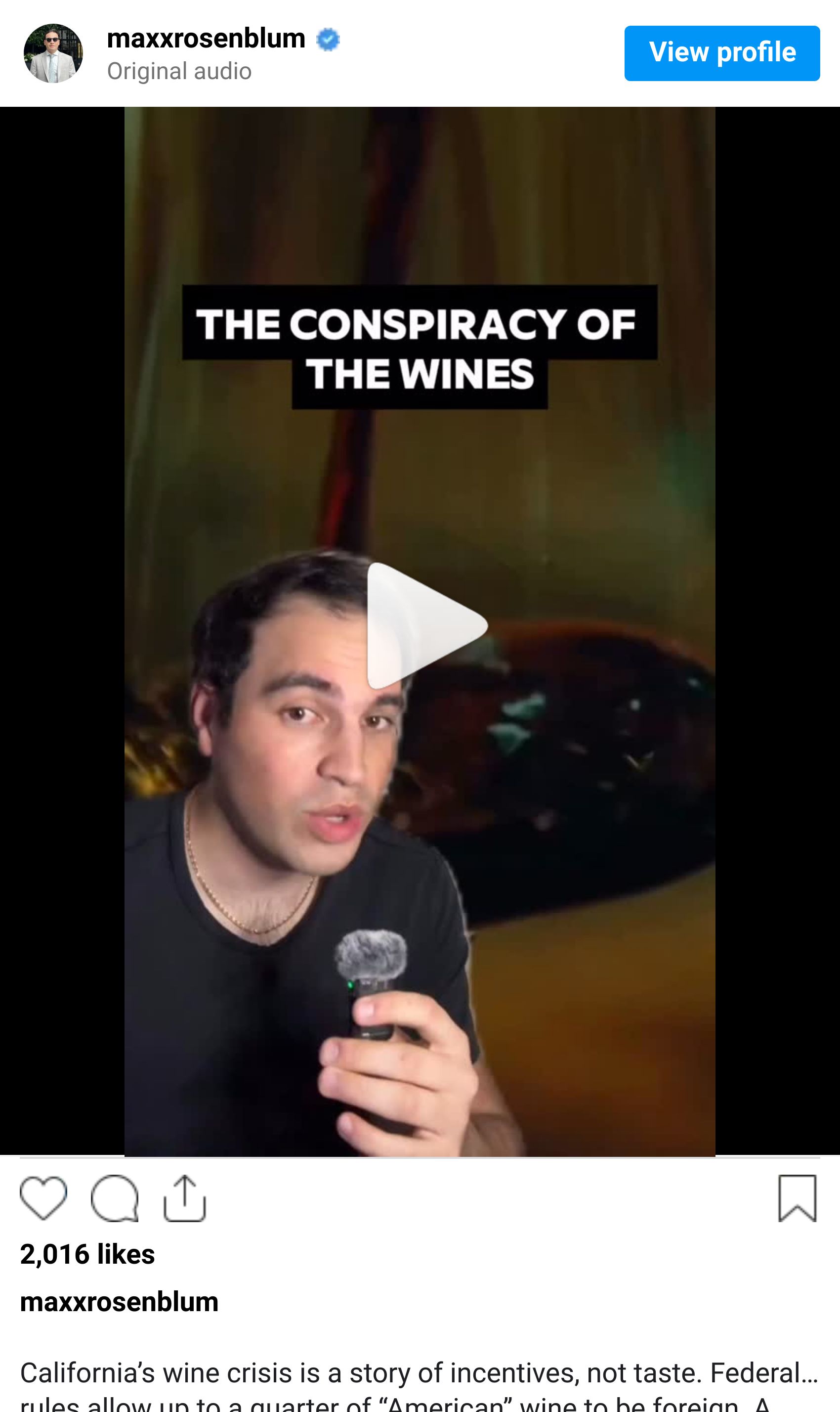
This video summarizes what is a pretty significant scandal in the wine industry regarding transparency. Essentially American wine makers are facing a surplus of domestic grapes, juice, and bulk wine but it is being compounded by American growers adding bulk foreign wine into their own bottles and still being allowed to label it as “American” wine. The regulations allow for up to 25% of the total volume of wine to be foreign and still be labeled as American. Because the foreign bulk wine is often cheaper than the its domestically produced counterpart, many large wine brands are opting to use it despite the surplus American wine.
Quick Hits:
The Noma abuse scandal and the number of people coming forward with their own testimonies has resulted in the creation of a website to chronicle the allegations and give support to those who need it.
This article talks about the choices we make as consumers when faced with information like that about Redzepi and Noma. It grapples with how we reconcile paying for a commodity that we know was brought with abuse and mistreatment.
Regarding wine surplus in the US this has some hope and silver linings included.
